


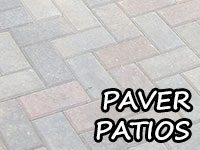


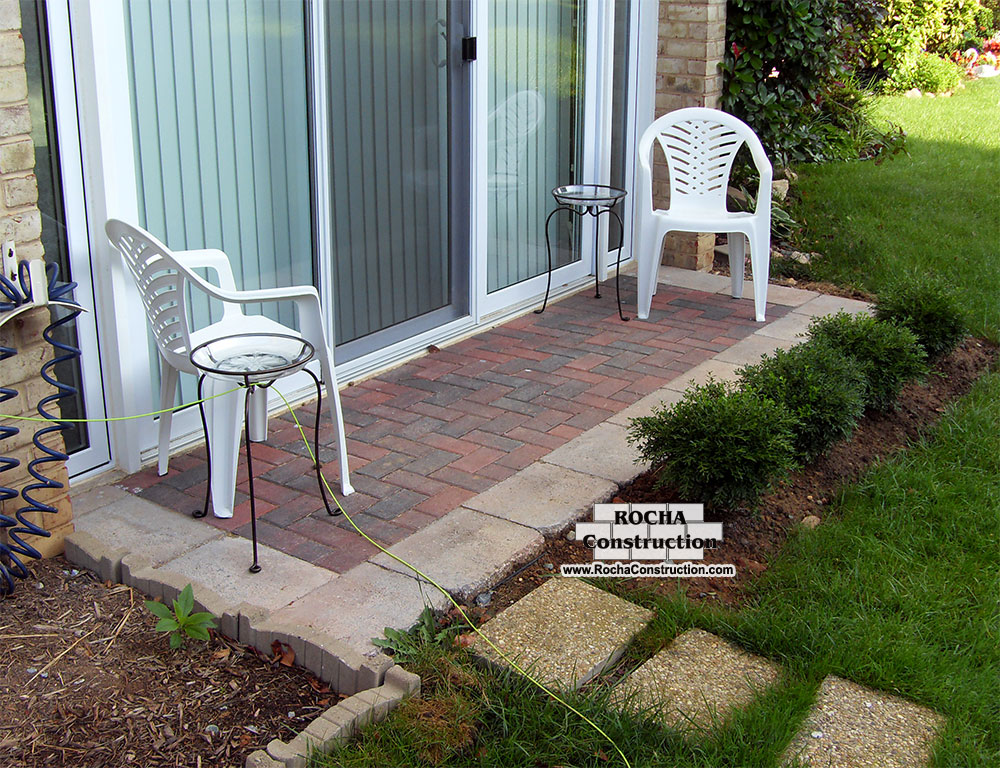
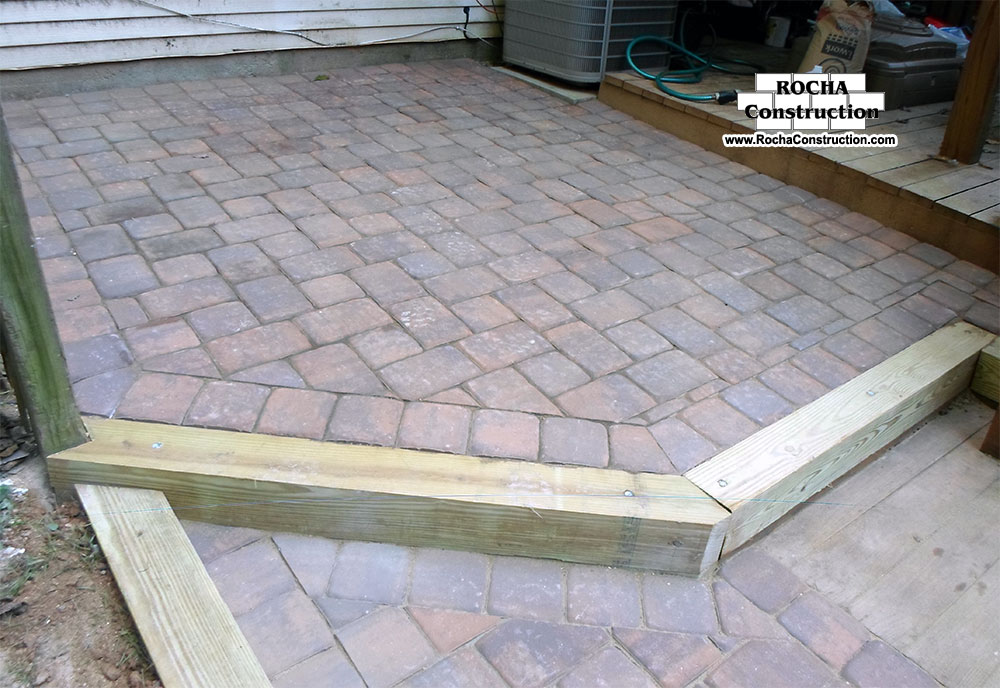
PAVER AND BRICK PATIOSPaver Patios are becoming more and more popular each year. They are a really affordable way for a contractor to create a larger patio design for a fraction of what it would cost to make it with real stone. 
Home owners have tight budgets these years, but they still want the best on their houses. That is when concrete pavers can become an option thanks to its low cost and somewhat easy maintenance. Pavers has been around for many years now, and the more popular brands have several designs and patterns to choose from. Some are meant to look like bricks, some others are meant to look like natural stone. But in any case, its low initial cost and fast installation might save you thousands of dollars if you are planing on building a large patio. 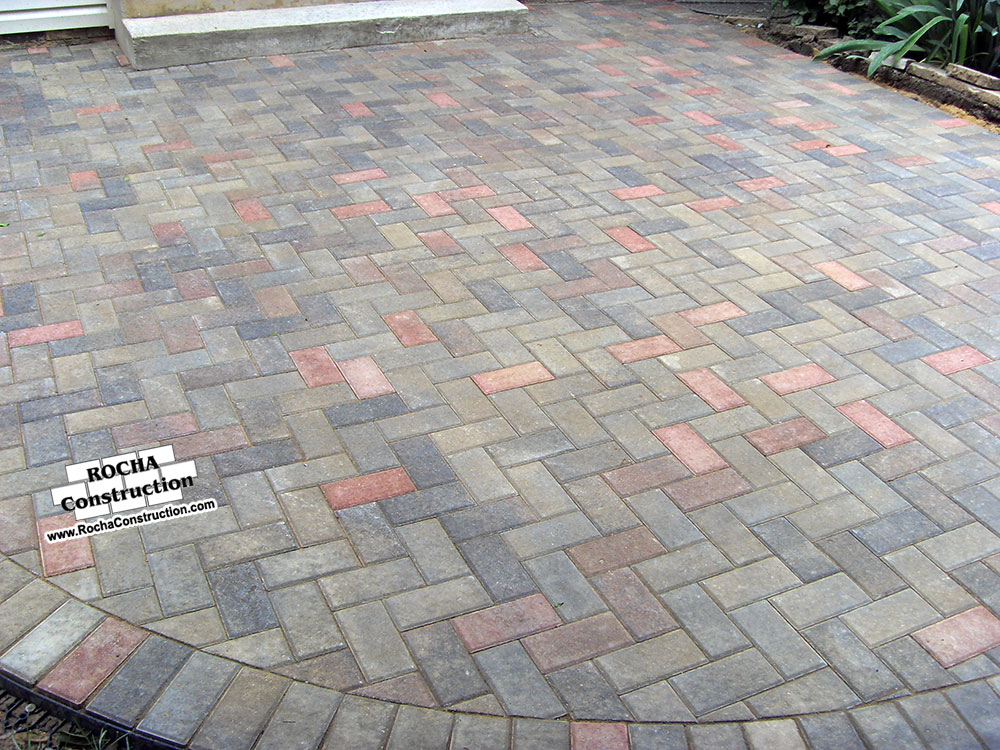
Let me go ahead and start with a few pointers on their installation. Any contractor or homeowner should install concrete pavers on compacted CR6 or stonedust (unless the application calls for a concrete base). This will allow you to remove or replace any piece that might get damaged in the future. For paver patio applications, make sure that the base of the pavers is at least 4" thick and well compacted! Any slack on the base would result on a patio that could become uneven in a matter of months. After the base is set, a thin layer of fine sand would be installed on top to level out the area. The thinner the layer, the better. Finally, the concrete pavers will sit on top to provide a finished floor for the patio. There are some other items that should be installed by the home owner or the contractor: - Weed barriers: This will prevent the soil from mixing and damaging the gravel base. - Edging and spikes: A plastic or metallic edge nailed to the soil will keep the pavers from moving. - Polymeric sand: (optional) More expensive than regular sand, but when used to fill the joints, the bond between the pavers is strenghten considerably. Make sure to request to have those items installed on your patio as well! This is a broad overview of how a stone contractor installs paver stones. There are many details and techniques that are not explained here. If you need a professional contractor to install or just help you with your DIY concrete paver patio, gives us a call. We offer free estimates for all Montgomery County, Maryland!! |
|
- GALLERY - It is NOT allowed to use our pictures without our written consent. |
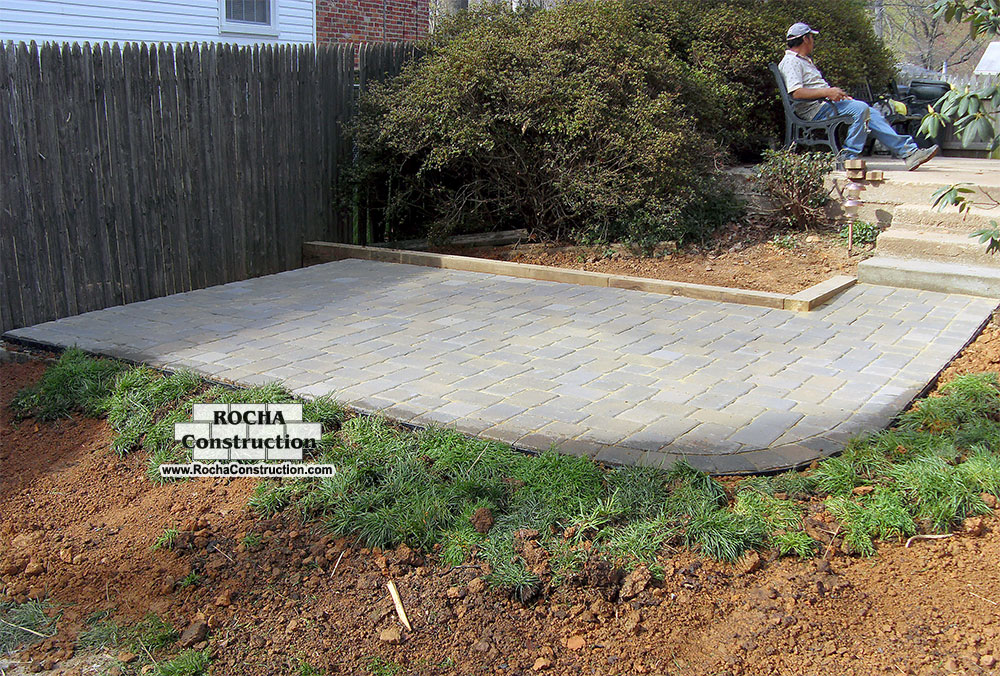
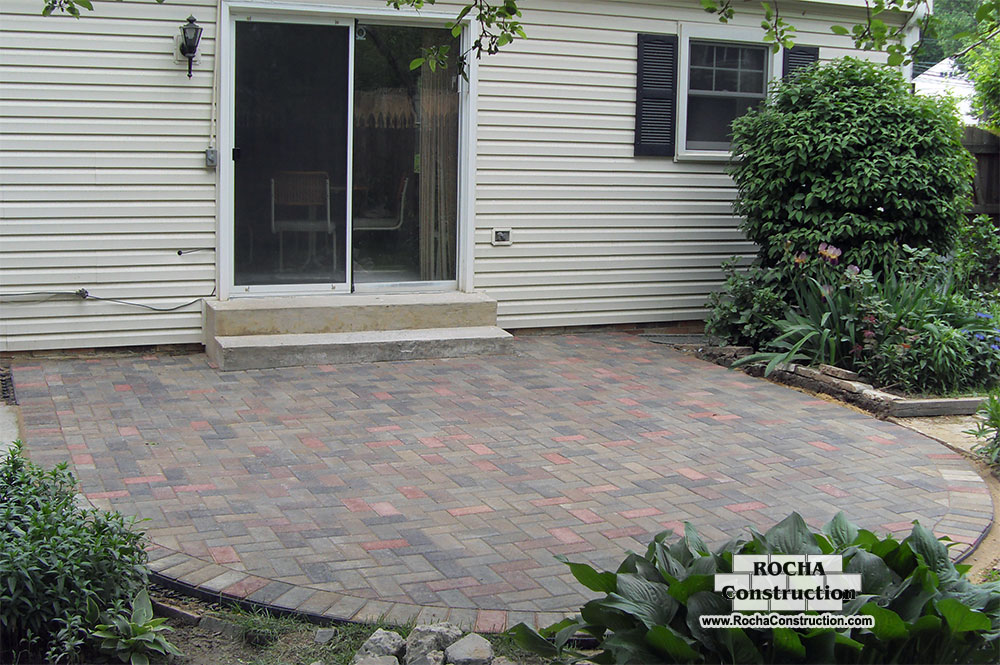
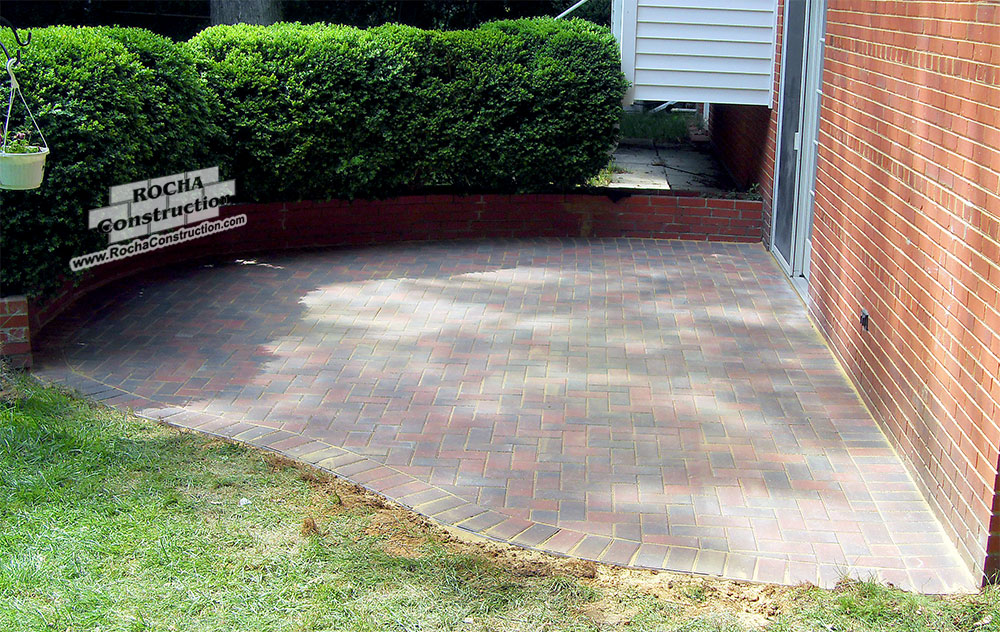
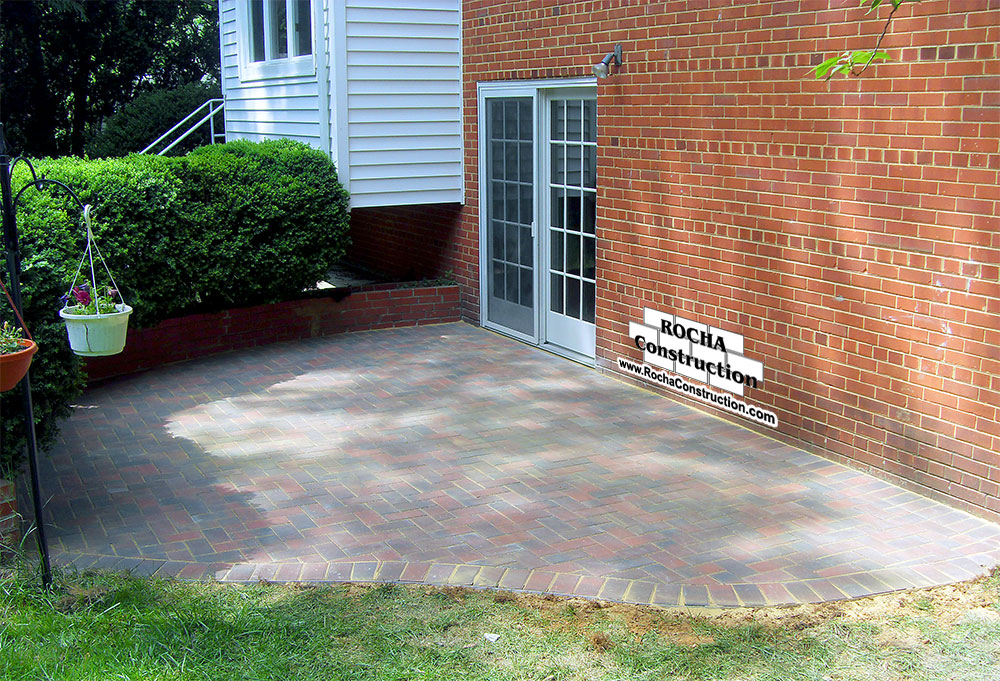
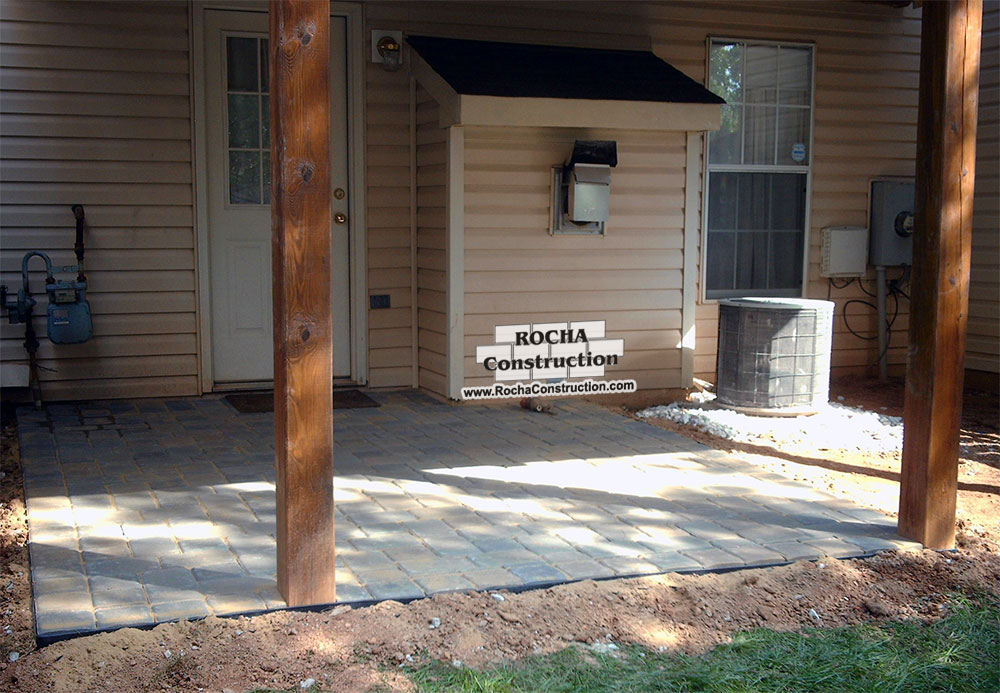

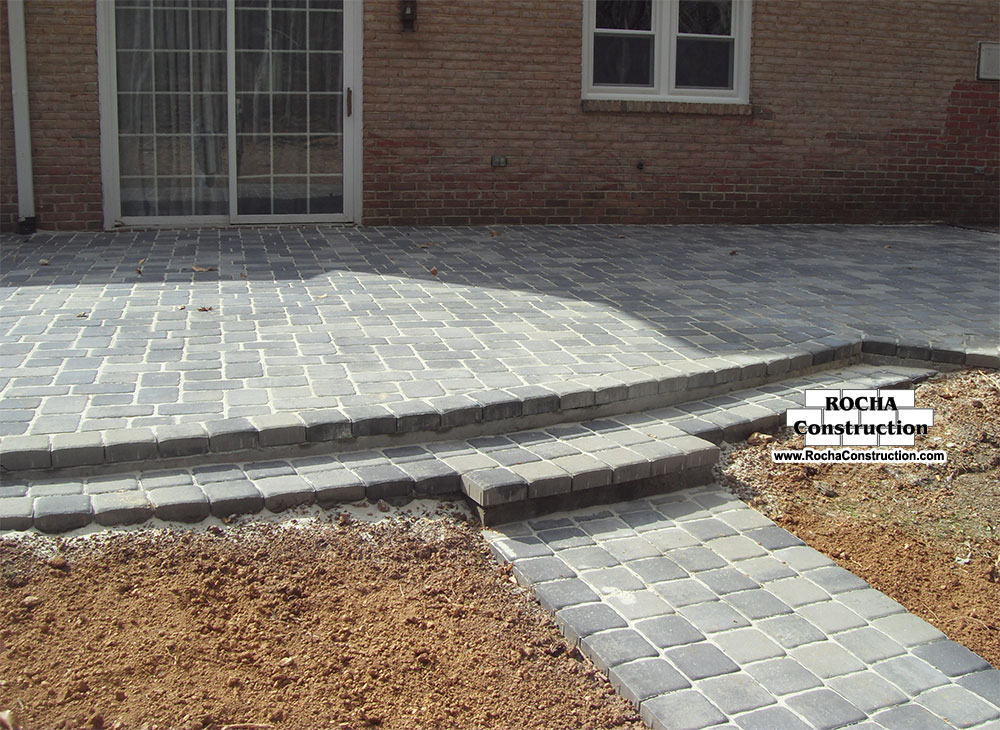

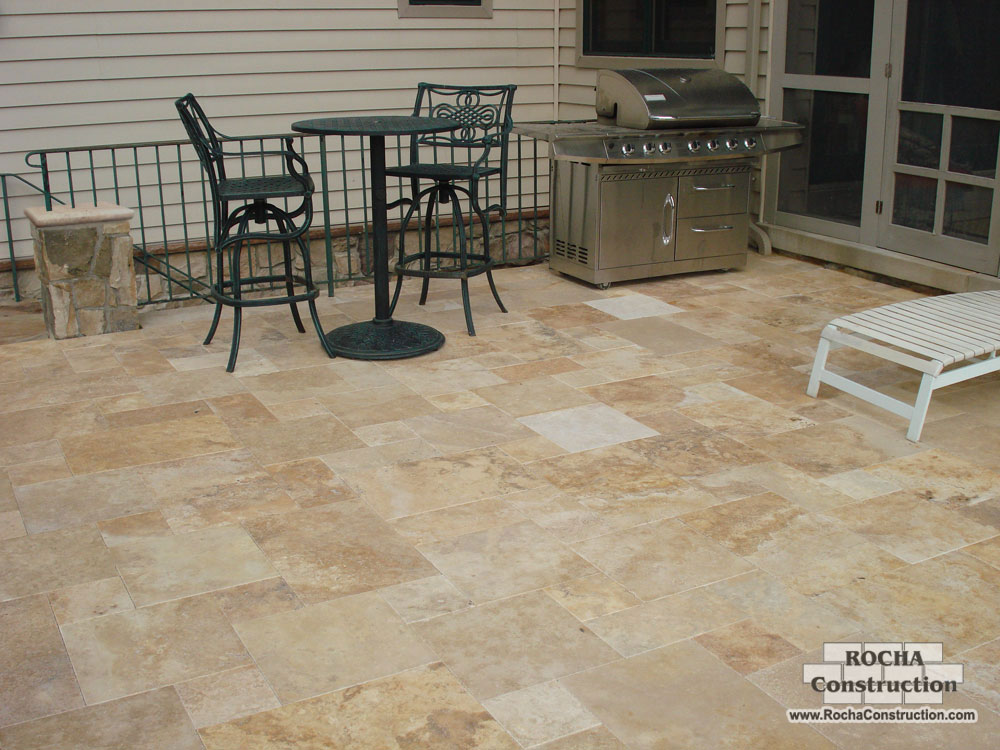
|
It is NOT allowed to use our pictures without our written consent. |
Concrete Paver & Brick Patio FAQs1. What is the difference between concrete pavers and brick pavers? Concrete pavers are manufactured from cement and aggregates with many shapes and colors, while brick pavers are made from kiln‑fired clay with a classic, timeless look. Both are durable but vary in cost, color options, and maintenance needs. :contentReference[oaicite:1]{index=1} 2. How long does a concrete, paver, or brick patio last? With proper installation and care, concrete and brick paver patios can last 25–50+ years, and even longer for high‑quality brick depending on use and climate. :contentReference[oaicite:2]{index=2} 3. How much does a paver or brick patio cost? Costs depend on materials, design complexity, and labor. Concrete pavers are generally more affordable than brick pavers, but prices vary by region and finish type. :contentReference[oaicite:3]{index=3} 4. What base preparation is needed for pavers and brick patios? A solid, well‑compacted gravel base with sanding layer is essential to prevent settling, shifting, or uneven surfaces over time. :contentReference[oaicite:4]{index=4} 5. Can I install pavers or brick myself or should I hire a professional? DIY is possible for experienced homeowners, but professional installation is usually recommended to ensure proper base prep, drainage, and long‑lasting results. :contentReference[oaicite:5]{index=5} 6. Do paver and brick patios need drainage? Yes. Proper drainage and slope away from structures prevent water pooling, erosion beneath the pavers, or uneven settling. :contentReference[oaicite:6]{index=6} 7. How do I maintain my concrete, paver, or brick patio? Regular sweeping, occasional rinsing, re‑sanding joints when needed, and sealing every few years (especially for concrete pavers) help keep patios looking good and prevent weed growth. :contentReference[oaicite:7]{index=7} 8. Will weeds grow between pavers or brick joints? Weeds can grow if joint sand erodes or isn’t installed properly. Keeping joints filled and using polymeric sand can help reduce weed issues. :contentReference[oaicite:8]{index=8} 9. Can individual pavers or bricks be replaced if damaged? Yes. One of the advantages of paver and brick patios is that damaged units can be removed and replaced without replacing the entire patio. :contentReference[oaicite:9]{index=9} 10. Are paver and brick patios slippery when wet? The textured surfaces of pavers and brick generally provide good traction, but proper surface finishing and maintenance help maintain slip resistance. :contentReference[oaicite:10]{index=10} |