

STAMPED CONCRETE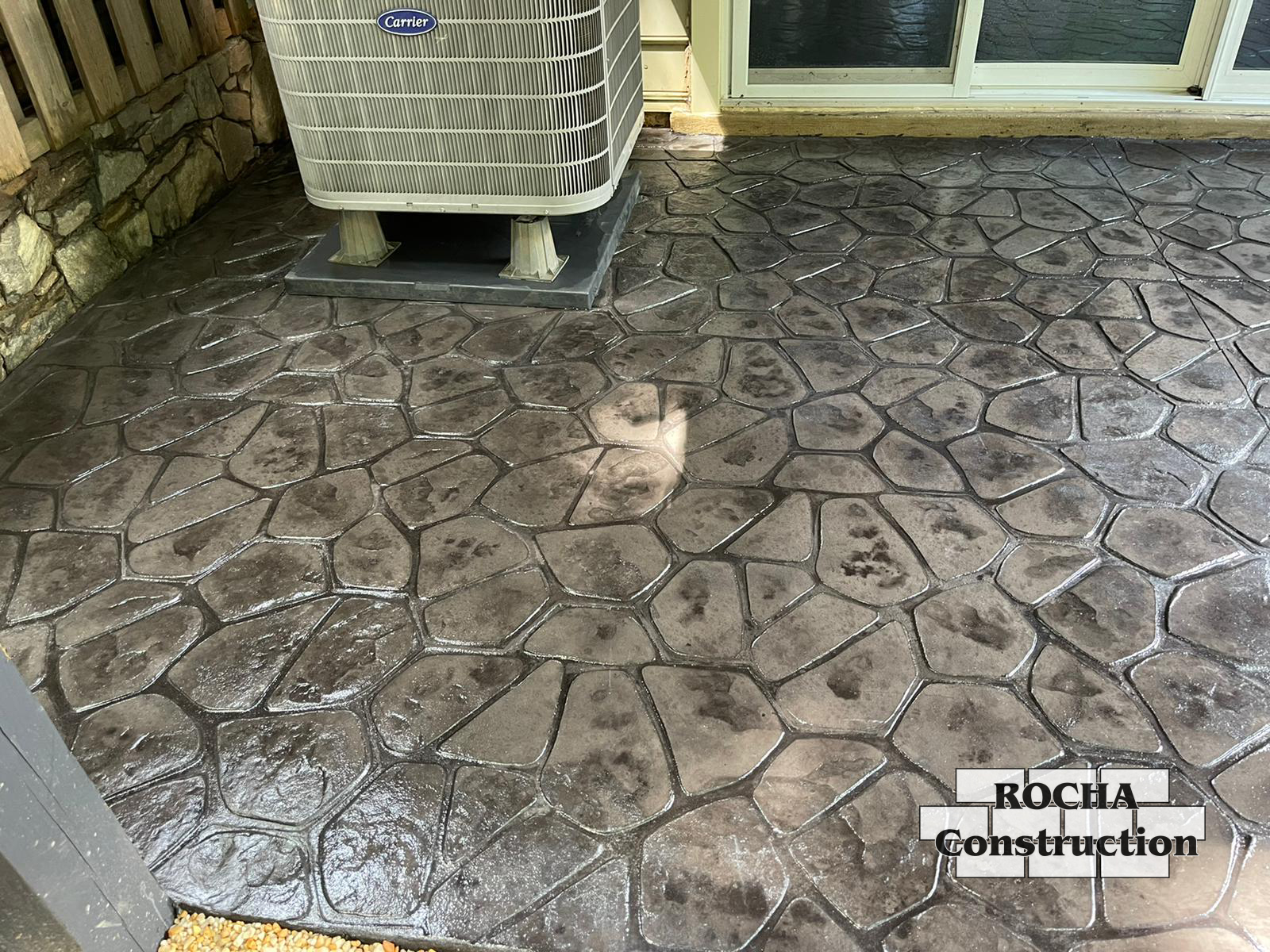
Stamped concrete is a versatile and cost-effective way to achieve the look of natural stone, brick, or tile without the high expense. By imprinting patterns and adding color to freshly poured concrete, we can create beautiful surfaces that enhance the aesthetics of your outdoor spaces while maintaining the durability and longevity of standard concrete. This technique can be applied to a variety of outdoor projects, including patios, driveways, walkways, pool decks, and even custom outdoor living areas. Stamped concrete allows homeowners in Montgomery County and throughout Maryland to enjoy elegant, high-end looks without the ongoing costs of natural stone or brick installations. While stamped and colored concrete requires proper installation, base preparation, and occasional maintenance, the results are striking. The textures and patterns can be customized to match the style of your home, your landscaping, or your personal taste. Large projects benefit most from stamped concrete, as the cost savings compared to natural materials become significant when covering over 1,000 square feet. At Rocha Construction, we ensure that every stamped concrete project is properly reinforced, sealed, and finished for maximum durability. Whether you’re looking to replace an old patio, build a new driveway, or add a decorative walkway, our team provides expert installation and guidance to make your project successful. We offer free estimates for all residents in Montgomery County and most of Maryland, so you can plan your stamped concrete project with confidence. Stamped concrete is the perfect solution for homeowners who want the beauty of stone or brick with the reliability and lower maintenance of concrete. Let us help you transform your outdoor spaces into elegant, long-lasting areas that increase your home’s curb appeal and functionality. |
|
- GALLERY - It is NOT allowed to use our pictures without our written consent. |
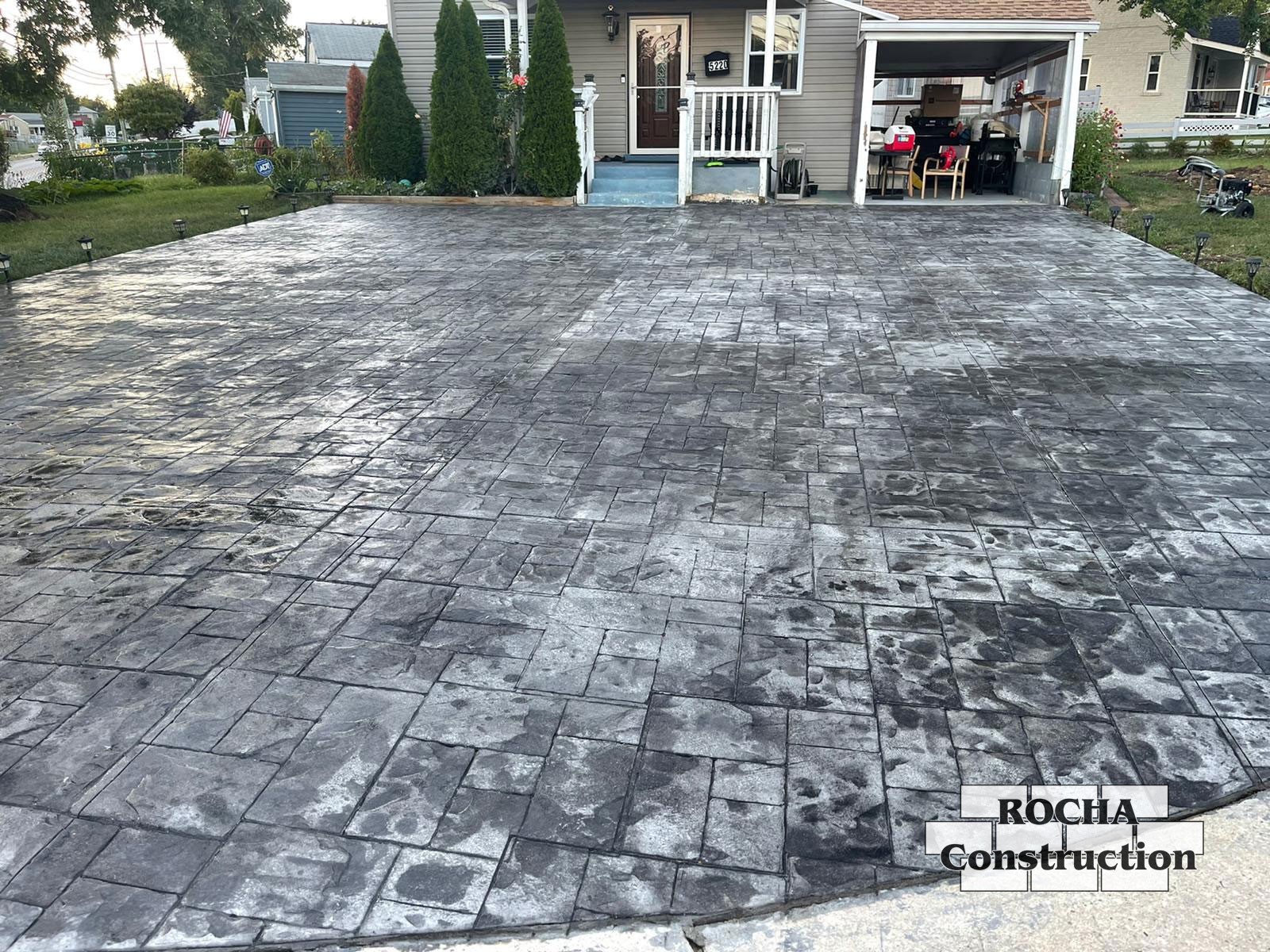
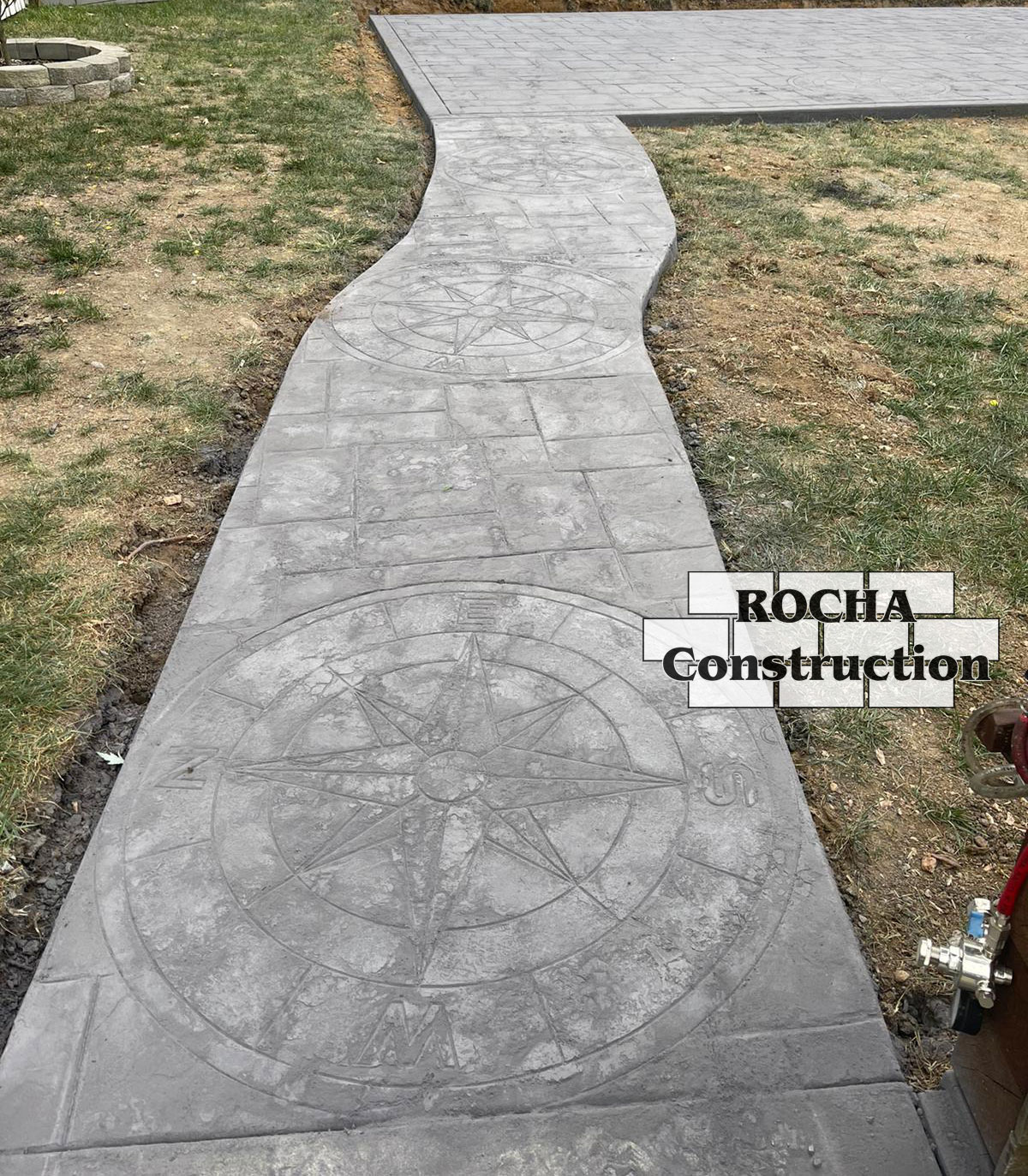
|
It is NOT allowed to use our pictures without our written consent. |
Stamped Concrete Patio FAQs1. What is stamped concrete? Stamped concrete is regular concrete that has been textured and patterned while wet to resemble brick, stone, tile, or other materials, adding decorative appeal to patios. 2. How long does stamped concrete last? With proper installation and maintenance, stamped concrete can last 25 to 40 years or more, depending on climate, usage, and care. 3. How much does a stamped concrete patio cost? Stamped concrete is usually more expensive than a basic poured concrete patio because of the extra labor and materials needed for stamping and coloring, but it is less expensive than natural stone or brick. 4. What types of patterns and designs are available? Stamped concrete can mimic brick, cobblestone, slate, tile, or wood planks, and can include various textures, patterns, and colored finishes. 5. Should I hire a professional or DIY? DIY is very difficult because stamping must be done while the concrete is wet, and proper coloring and sealing require experience, so professional installation is strongly recommended. 6. Do stamped concrete patios crack? Concrete can crack due to shrinkage, settling, or temperature changes. Control joints, proper base preparation, and sealing help reduce visible cracking. 7. How do I maintain stamped concrete? Maintenance includes regular cleaning, resealing every few years to preserve color and texture, and repairing any small cracks that develop. 8. Can stamped concrete be colored? Yes, integral color, stain, or acid‑etch techniques are used to add long lasting color to stamped concrete, giving a realistic natural stone or brick appearance. 9. Are stamped concrete patios slippery when wet? Stamped concrete can be slippery if smooth finishes are used, but textured stamps and a proper non slip sealer improve traction. 10. How do stamped concrete patios compare to natural stone? Stamped concrete can mimic the look of natural stone or brick at a lower cost, requires less maintenance, but may not have the same longevity or texture as real stone. |